
Stacey C. LeClair
Taming Waters, Transforming Worlds: Law, Land, and Belonging in Seventeenth-Century England & Virginia
Draining the Fens and colonizing the Chesapeake were not separate endeavors.
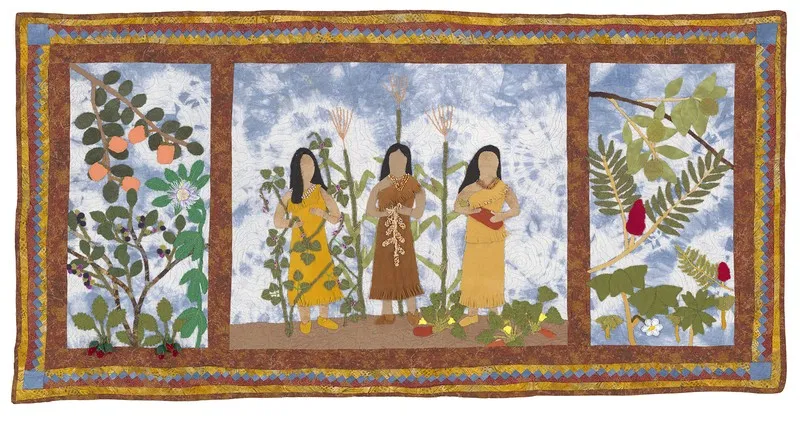
© UVA Library Three Sisters Quilt
Draining the Fens and colonizing the Chesapeake were not separate endeavors.
Picture the scene on the Rappahannock River in August 1608. A group of Manahoac men from Hasinninga are fishing near the Falls, where the tidal river gives way to the rocky uplands of the Piedmont. Their leaders and neighboring communities are away hunting, expected to gather later at Mohaskahod, a hunting camp along the boundary separating Manahoac and Powhatan lands. The Falls mark a vital jurisdictional edge: below lie the coastal plain and towns of the Powhatan chiefdom; above lie the river valleys, hunting grounds, and towns of the Siouan-speaking Manahoac and Monacan world.
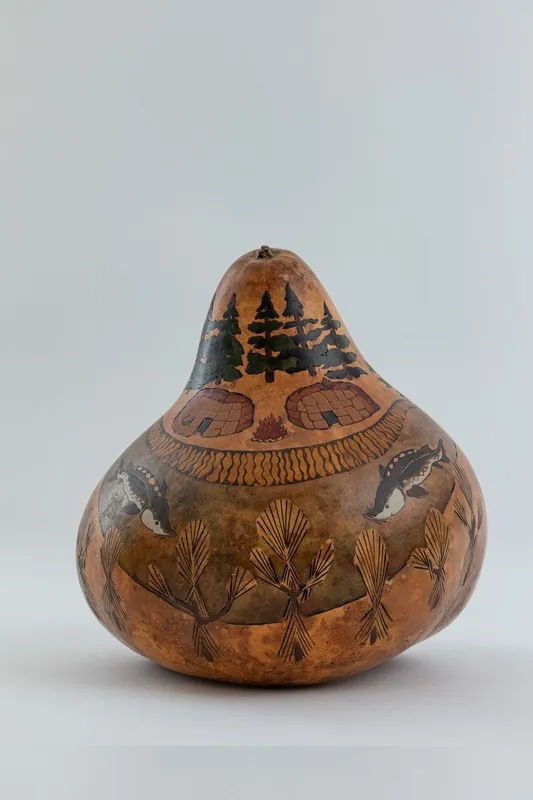
While the party fishes, they spot an English boat led by Captain John Smith, accompanied by Mosco, a Powhatan guide who has cautioned Smith about crossing the Fall Line into Siouan territory. When the English cross this boundary, the Manahoac fishing party fires arrows from the wooded bank above. This was not a random ambush; it was a physical enforcement of border control and territorial law. To fish, hunt, and defend these waters was to exercise an ancient, unceded jurisdiction.
When a warrior named Amoroleck is wounded and captured, Smith questions him through Mosco. Surrounded by English trade goods with his wounds bound, Amoroleck delivers a direct declaration of Indigenous sovereignty: “We heard you had come from under the world, to take our world from us.”
When Smith presses him on how many worlds exist, Amoroleck names three distinct sovereign powers: the Monacan in the hills, the Powhatan along the coast, and the Massawomeck to the north. Beyond the mountains, he notes, he can speak of nothing, because “the woods were not burned.”
Taming Waters, Transforming Worlds allows you to see those words printed on seventeenth-century rag paper in Smith’s 1624 Generall Historie of Virginia. Spoken across a violent divide, recorded in colonial print, and preserved in the archive, this passage is an explicit statement of Indigenous legal jurisdiction. Amoroleck was not describing an unowned wilderness; he was laying out a formal geopolitical map defined by sovereign nations, treaty boundaries, seasonal hunting camps, and active land stewardship through fire. His words demonstrate that Indigenous land rights were grounded in living legal orders long before English legal charters attempted to overwrite them as “waste.”
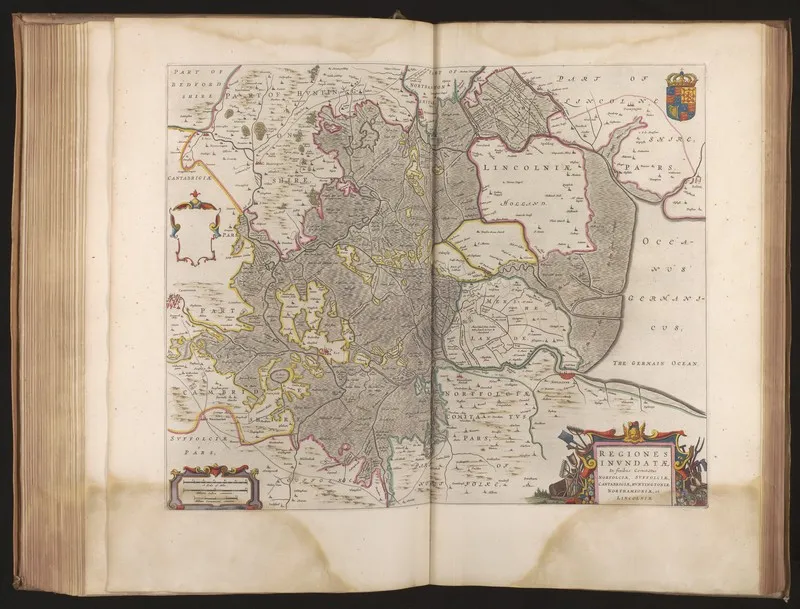
The fundamental takeaway is one of calculation and intent: the legal apparatus deployed in the Chesapeake was not a spontaneous response to a new frontier, but a deliberate, practiced strategy. The same elite group of investors who rebranded working English wetlands as “drowned waste” to strip fenland commoners of their ancient customary rights carried that exact mechanism across the Atlantic to dismantle Indigenous jurisdiction.
Recognizing this intentional parallel fundamentally alters how we argue legal history, teach national origins, and understand contemporary land rights. It demonstrates that the erasure of lived, shared worlds was never an inevitable byproduct of progress, but a calculated technology of dispossession, one that established a global template for settler colonialism while revealing that alternative, deeply rooted ways of belonging to land and water have always endured.
Curator: Bora Pajo
The rest of this thread
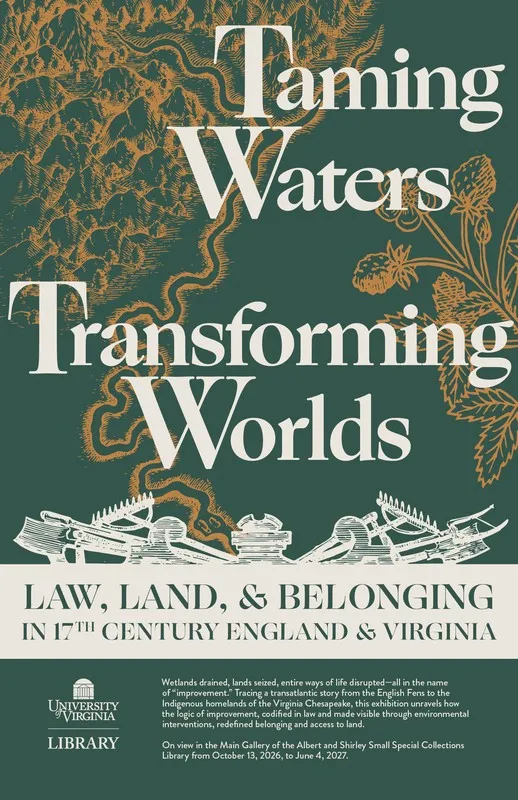
Taming Waters, Transforming Worlds: Law, Land, and Belonging in Seventeenth-Century England & Virginia
Stacey LeClair. Taming Waters, Transforming Worlds: Law, Land & Belonging exhibition. Charlottesville: Albert and Shirley Small Special Collections Library, University of Virginia, October 2026 to June 2027.
Available here →November 26, 2026
20261126-leclair-taming-waters-transforming-worlds-a-close-up
A close-up

Stacey C. LeClair
Stacey Crystal LeClair is a Ph.D. candidate in history at the University of Virginia specializing in early modern Atlantic legal and environmental history. Her research explores how legal frameworks and environmental transformations reshaped landscapes, legal authority, and human identities across seventeenth-century England and Virginia. A first-generation scholar, her work brings legal archives into conversation with material culture. Drawn directly from her doctoral dissertation, Stacey solo curated Taming Waters, Transforming Worlds—the first major exhibition in UVA Library history to be led by a graduate student.
More in Arts
More in Books
Know something the rest of us don't?
Most threads on Rorotoko begin with our invitation. Any thread can begin with a proposal: you write it with the same prompts every thread answers, and we review it.
Propose a thread →