
Stacey C. LeClair
Taming Waters, Transforming Worlds: Law, Land, and Belonging in Seventeenth-Century England & Virginia
Draining the Fens and colonizing the Chesapeake were not separate endeavors.
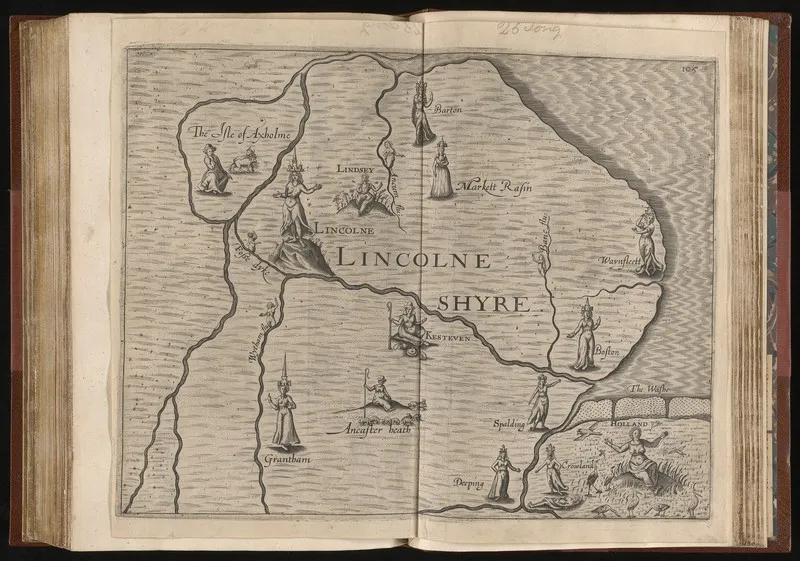
© UVA Library PolyOlbion Michael Drayton
Draining the Fens and colonizing the Chesapeake were not separate endeavors.
This exhibition grew out of a moment of archival collision that refused to stay within the boundaries of a single continent. While researching early Virginia land patents and Indigenous territorial jurisdiction, I kept encountering evidence of a world that refused to conform to English legal categories. In primary sources, Indigenous nations were not wandering nomadic hunter-gatherers, but societies exercising clear territorial sovereignty, managing forests through controlled burning, maintaining seasonal fish weirs, and defending precise political boundaries along the fall lines of major rivers.
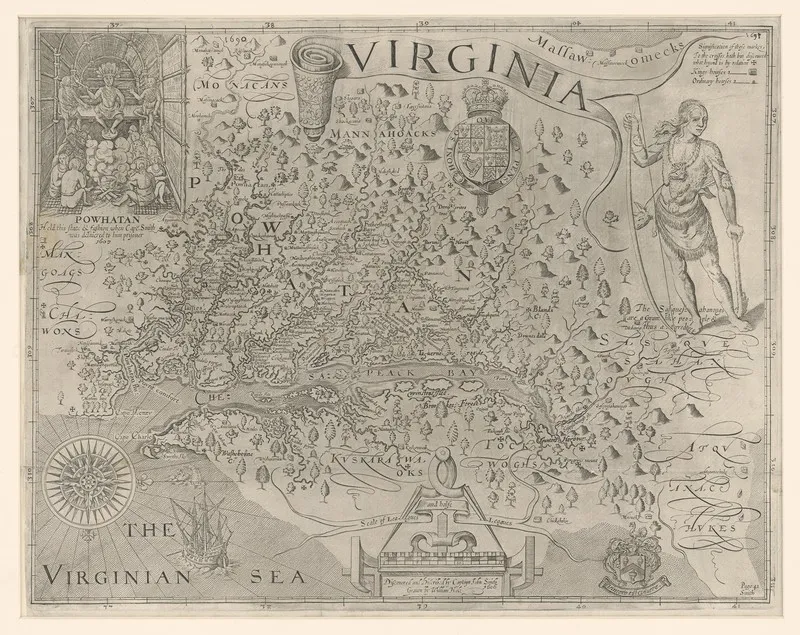
When I discussed these findings with my dissertation advisor, noting how English promoters struggled to reframe these intensely managed landscapes as “unowned waste,” he made an offhand suggestion: Take a look at the historiography of seventeenth-century eastern England, particularly the Fens. What you're describing sounds remarkably like what was happening to English commoners back home.
Following that thread into the archives transformed my understanding of early Atlantic history. The parallels were not just striking; they were almost too similar to be a coincidence. In the Fens of Lincolnshire and Cambridgeshire, ordinary English communities had spent centuries living in rhythm with seasonal floods, grazing livestock, cutting reed for thatch, digging peat, and harvesting fish from shared waters. Yet, just as in Virginia, speculative investors known as "projectors" were deploying royal patents and legal maneuvers to brand these working wetlands as drowned, wasted, and unproductive in order to enclose them into private real estate.
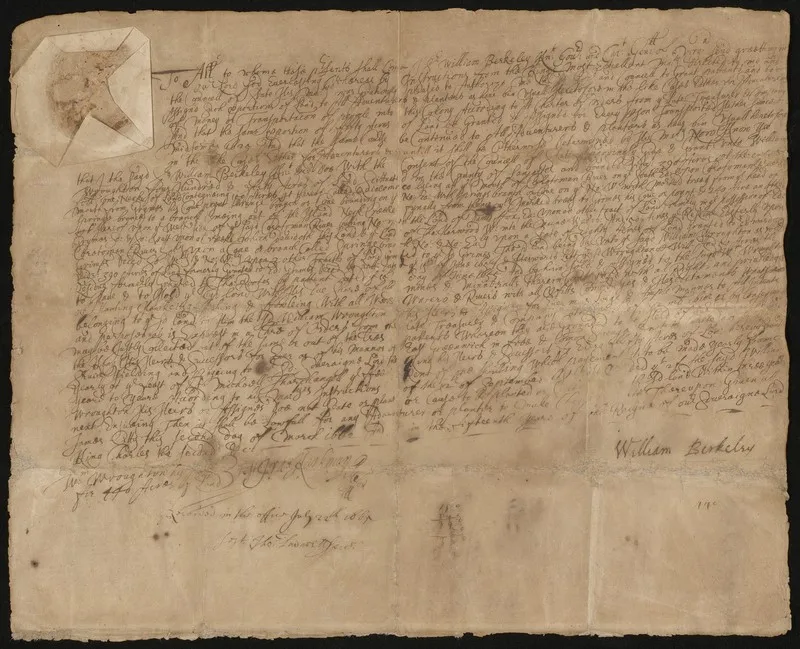
As I dug deeper into the manuscript records, cross-referencing patent rolls, commission logs, and Virginia Company subscriber lists, the intellectual parallel hardened into a concrete, material connection. I uncovered a sprawling web of overlapping names. The very people designing and financing the drainage of the English Fens were the same individuals investing in and governing the colonization of Virginia. Entire prominent families, court factions, and political allies were simultaneously directing both projects. Draining the Fens and colonizing the Chesapeake were not separate endeavors; they were two fronts of the exact same enterprise, managed by an overlapping circle of men.
Ongoing thread. More from Stacey C. LeClair to follow.
Curator: Bora Pajo
The rest of this thread
Taming Waters, Transforming Worlds: Law, Land, and Belonging in Seventeenth-Century England & Virginia
Stacey LeClair. Taming Waters, Transforming Worlds: Law, Land & Belonging exhibition. Charlottesville: Albert and Shirley Small Special Collections Library, University of Virginia, October 2026 to June 2027.
Available here →November 19, 2026
20261119-leclair-taming-waters-transforming-worlds-the-wide-angle
The wide angle

Stacey C. LeClair
Stacey Crystal LeClair is a Ph.D. candidate in history at the University of Virginia specializing in early modern Atlantic legal and environmental history. Her research explores how legal frameworks and environmental transformations reshaped landscapes, legal authority, and human identities across seventeenth-century England and Virginia. A first-generation scholar, her work brings legal archives into conversation with material culture. Drawn directly from her doctoral dissertation, Stacey solo curated Taming Waters, Transforming Worlds—the first major exhibition in UVA Library history to be led by a graduate student.
More in Arts
More in Books
Know something the rest of us don't?
Most threads on Rorotoko begin with our invitation. Any thread can begin with a proposal: you write it with the same prompts every thread answers, and we review it.
Propose a thread →