
Eranda Jayawickreme
Is There Always Value to Adversity? Looking Beyond "What Doesn’t Kill You Makes You Stronger"
If bad things had good outcomes, you wouldn't call them bad things.
If bad things had good outcomes, you wouldn't call them bad things.
I was born in London, because my parents were Sri Lankans who had moved to the UK, my father in the '60s, my mother at the beginning of the 1970s. But I moved back to Sri Lanka when I was four years old. It was 1984, a year after these terrible race riots in Sri Lanka between the Sinhalese majority and the Tamil minority. From 1983 until 2009, there was a long-running civil war. The war was localized in the north and the east of the country, but every so often there'd be bombs that would go off in the major cities.
And when I was 8 and 9 years old, there was an insurrection, when a Marxist group tried to overthrow the government. We couldn't go to school for months. We would wake up and there would be people who had been killed the previous night and left on the side of the road. We drove past bodies that had been burnt overnight.
All this stuff happened, and because I was young, I didn't know any better. I just thought, well, this is just what happens when you're growing up. I only realized maybe a couple of years after moving to the U.S. that that wasn't normal, that most people didn't have those types of lives. But it also got me reflecting on the experience of people. It's not clear to me that people were getting stronger. You could tell people were weary, they were resigned to what was happening. But they were getting on with their lives, accepting what happened as karma or God's will. People got on with their lives. So I got interested in this question of resilience more broadly, of how people manage in the wake of adversity.
I think there's a contrast between that broad view of how people manage the challenges that life throws at them and the type of reaction people had after 9/11. I remember there was a speech, given either by George W. Bush or Rudy Giuliani soon after 9/11, where they spoke about how we're going to come back stronger, how we're going to overcome this. That was a different narrative. So I was aware of that gap.
A few years later, I was in graduate school doing research on resilience among war-affected Sri Lankan Tamil communities, and I was introduced to this idea of post-traumatic growth. Initially I thought, oh, this is interesting, this might be another construct to include in my research. And I did, in one part of my dissertation. But around that time, there was research coming out, one article in particular in Psychological Science, which I talk about in the book, that questioned whether the measures that assess post-traumatic growth actually track people's changes across time. And they found that, for the most part, they didn't.
So I got interested in that as a methodological question, and then that expanded into a broader concern about the credibility of research done in psychology, especially on topics where we already have a vested interest in a certain type of answer. You've probably heard about the replication crisis, and the fact that a lot of research has been scrutinized. A good example of this is research on willpower. I do think research on post-traumatic growth is a similar scenario. You could argue that's the main thrust of the book.
There's a long chapter in the book, which I'm sure is going to bore a lot of people, talking about, hey, in this study we did this, in this study we did this. But the whole point was to show: if these are the assumptions behind post-traumatic growth, are these assumptions met? Do people understand the questionnaire the way they should if you want to assess growth? What happens if you track people over time? What does it even mean to grow? The term growth implies that you're better off than you were before. Aspects of a personality can definitely change for the better, but can you say that you've grown overall? Are you better off overall? That question got me interested in more interdisciplinary research, so in chapters 2 and 3, I talk about how different religious and philosophical traditions have spoken about this idea of growth and transformation.
And the idea of the book really came together when I taught an undergraduate research seminar on it a couple of years ago. Being able to think through the different topics and the argument by talking to my students helped me solidify the structure of the book.
Most cultures have narratives that help you manage adversity and suffering. In the US, you have the redemption narrative, and I think that comes from a very particular Christian understanding. If you look at the research of Dan McAdams, it's very much tied in with a very particular Protestant understanding: the reason there's change is that you can grow from it. But there are likely other narratives that come from Christianity, like the narratives that have to do with lament, where it isn't obvious that you need to get to a better place than you were before.
So I don't want to make the case that the redemption narrative captures the full scope of the narratives Christianity provides us. In Buddhism, you have this idea of karma, which provides an explanation. It's also somewhat passive, and in some ways it can be a pretty punitive narrative, where you can't do anything about it because of what you did in your past life. In the UK, there's evidence (Laura Blackie has done some work on this) that the narrative people buy into is more a recovery narrative than a redemption narrative. It's not that you find something good. It's that you're able to recover and get on with your life. When I talk to my Chinese students, they say, oh yes, we have a narrative around redemption in China, but it tends to be more around the group, or the community, or the country, rather than the individual.
Part of what it means to be a good scientist is to acknowledge the fact that we bring values into our science. We study the questions we study because we care about outcomes. I have colleagues who study the achievement gap in schools because they care about closing the achievement gap, and that's good. We all become scientists because we value certain things. One of the challenges is that there are the personal, maybe moral, reasons that we engage in research, but there are also the epistemic or intellectual values that we think are important for science: accuracy, open-mindedness, being humble, being able to acknowledge when you made a mistake, or when something about your study didn't work out. Ultimately, we have to figure out a way to balance both these moral and epistemic values when we're doing science, because our value as scientists comes from getting it right, the best we can. And in many cases, if we feel like there's something riding on the results, then we're motivated to say that something has worked out, or something is true, even if the methods are questionable, or you can't make a claim with that degree of certainty.
These narratives of how we manage suffering are important, because we are finite human beings. We are going to experience failure and heartbreak and struggle and adversity, and if you're unlucky, maybe severe trauma, and we need to figure out a way to make sense of it. So we need those stories. In many cases the stories will be comforting; they may not always be true to the realities of our lives. But those narratives are necessary. What's distinctive about the U.S. narrative is this focus on bad things having good outcomes. I mention in the book that my mother once told me, if bad things had good outcomes, you wouldn't call them bad things. I think it's a very distinctive American idea that everything is an opportunity to become the best version of yourself. That is, I think, what Nietzsche believed, depending on what you think Nietzsche really meant: you have to think of everything in your life as a stepping stone to becoming the best version of yourself. I just think that's a very, very particular form of redemption, and I don't think it tracks how people respond to adversity. I also don't think it's helpful for everyone.
There might be variations of redemption that exist around the world, and there are likely other narratives. Some of the work I hope to do in the next couple of years with collaborators is to identify what those narratives are, even in the United States, because the United States is not a monolith when it comes to culture. And I think the fact that I wasn't born in the US gives me an outsider perspective that's helped me. The view I express in the book is very much the view of a cultural outsider to how Americans think about these questions.
Ongoing thread. More from Eranda Jayawickreme to follow.
Curator: Bora Pajo
The rest of this thread
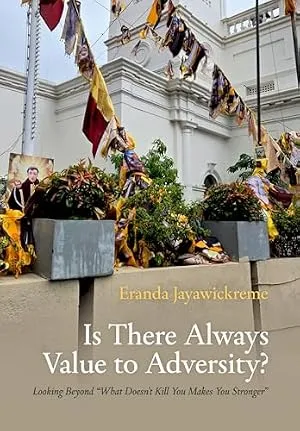
Is There Always Value to Adversity? Looking Beyond "What Doesn’t Kill You Makes You Stronger"
Jayawickreme, E. (2026). Is there always value to adversity? Looking beyond "What doesn’t kill you makes you stronger." Oxford University Press.
Available here →November 18, 2026
20261118-jayawickreme-is-there-always-value-to-adversity-the-wide-angle
The wide angle
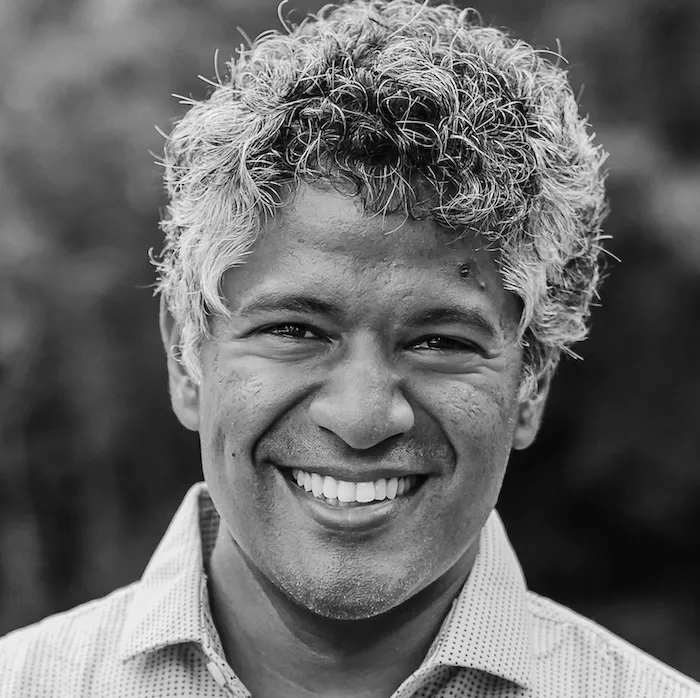
Eranda Jayawickreme
Eranda Jayawickreme is Harold W. Tribble Professor of Psychology & Senior Research Fellow at the Program for Leadership and Character at Wake Forest University. His research focuses on the interdisciplinary study of moral and intellectual character, character formation in the wake of adversity, and flourishing. His awards include the 2023 Early Career Contributions Award from the International Society for the Science of Existential Psychology, the 2018 Faculty Excellence in Research Award from Wake Forest, and the 2015 Rising Star award from the Association for Psychological Science. He is currently editor-in-chief of Personality and Social Psychology Review.
More in Books
Know something the rest of us don't?
Most threads on Rorotoko begin with our invitation. Any thread can begin with a proposal: you write it with the same prompts every thread answers, and we review it.
Propose a thread →