
Nicolas Guilhot
Conspiracy: The History of a Political Obsession
Redemption will not come from truth, but from hope.
“What happens when the political ideologies that kept alive the hope of a better future follow the fate of the religious expectations they had replaced? And what happens when the most successful of these ideologies—liberalism—declares it has fulfilled its purpose and works against any attempt at transforming the present? Saying that we can no longer imagine a world “different from the present one, and at the same time better” may be an unbearable position, especially if many people feel that their world is unraveling. The apocalyptic languages of the past transformed such feelings by disclosing futures that helped people cope with present anxieties; our version of the end of history seems instead to be a desolate and intransitive ending, offering no hope. “The world was disappearing, and so was I,” Naomi Klein writes in her exploration of the warped reality of post-Covid life and its conspiracist musings.
In this hopeless eschatology, there is no glimmer of a new dawn but only the crepuscular hue of a day fast receding into darkness: all one can do is try to retain the last rays of light. The only possible future inevitably takes the form of a return to the past. “The problem was the following,” the novelist Georgi Gospodinov writes in Time Shelter, where he imagines European societies organizing referendums to choose the era of the past they want to live in: “how can we gain a little more time for tomorrow, when we face a critical deficit of future? The simple answer was: By going backward a bit.” The arrow of time turns back onto itself: the kingdom is behind us. Redress and justice are to be sought not in the creation of a new world but in the retrieval of something that has been taken away, in the recovery of a foundational truth. One must take the kingdom back and make it great again.
Conspiracy theories are the inevitable appendage to the end of history—especially when the end of history does not deliver on earlier promises. They capture the catastrophic dimension of the present, the feeling of powerlessness, and the sense that the world eludes our agency and recedes into an unattainable background, leaving us unable to disclose a horizon beyond the breakdown at hand. That these feelings find their equivalents in specific psycho-pathological conditions, like schizophrenia or paranoia, tells us something not about the condition of the individuals who experience them, but about the unhealthy state of a culture that does not provide the collective resources to overcome these feelings. More than anything, conspiracy theories capture the loss of hope, with all its traumatic consequences. They represent only the destructive element of the apocalyptic narrative, without the longing for a future good that this narrative used to offer in both its religious and its secular guises. There is nothing creative in the destruction they envision, which makes them backward-looking, nostalgic, indeed reactionary.
Any serious attempt at understanding conspiracism today must start not with the question of truth, but with the sense of hope that only political visions of history as a human creation can provide. Pier Paolo Pasolini once wrote that historicism was something “without which it is impossible to live a civilized life.” What he had in mind was not the philosophy of history excoriated by Popper or some other abstract doctrine, but the existential confidence that the future is open-ended and not simply a stultifying repetition of the present. It may well be that, in waging a relentless battle against historicism and identifying itself with the end of history, modern liberalism has undermined this confidence and, along with it, the foundations of a civilized life.
There are indeed good reasons to believe that it is impossible to live a healthy life at the end of history; compelling visions of new beginnings, even if their exact nature eludes us, are necessary. Without them, it is impossible to let go of our present way of life, no matter how unsustainable, violent, and miserable it may be. In this condition, the defense of truth easily sounds like an injunction to reconcile oneself with a world from which many feel excluded. There is no appeal to such truth. Redemption will not come from truth, but from hope. It is true that even hope, nowadays, sounds like a worn-out slogan: it has been “preached from every pulpit,” as Ernst Bloch once wrote. Too often, the invocation of hope has been the Trojan horse for a return to the past: for promises not fulfilled, roads not taken, comforts of previous dispensations—for the chance that, this time round, the old playbooks will work. But this quietist nostalgia is the opposite of true hope: hope is an anticipatory force that enables us to let go of what holds us back and to leave behind what makes us suffer. It trades a present of despondency for a future good that may be unknown, but only because it is not set in advance and remains ours to find. Hope, ultimately, is the confidence that history is not written, but made.”
Curator: Bora Pajo
The rest of this thread
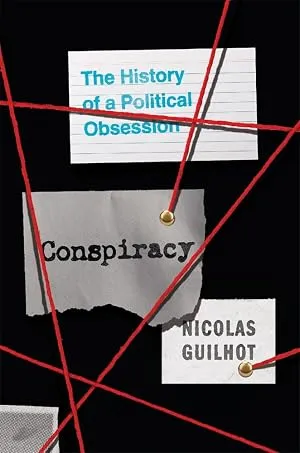
Conspiracy: The History of a Political Obsession
Guilhot, N. (2026). Conspiracy: The history of a political obsession. The Belknap Press of Harvard University Press.
Available here →November 11, 2026
20261111-guilhot-conspiracy-a-close-up
A close-up

Nicolas Guilhot
Nicolas Guilhot is professor of intellectual history at the European University Institute, Florence, and incoming professor of political science at City College New York. He lives in New York.
More in Books
Know something the rest of us don't?
Most threads on Rorotoko begin with our invitation. Any thread can begin with a proposal: you write it with the same prompts every thread answers, and we review it.
Propose a thread →