
Tarik O'Regan
Testament
Who has the words?
There is a moment near the beginning of Testament that contains, for me, much of the opera in miniature.
We are at the tomb of Lazarus.
Martha is begging for her brother to be brought back to life. We know this story. Lazarus is raised from the dead. In the Christian tradition it is a miracle, and a sign of what is to come.
But imagine actually being there.
That was the useful question.
What would it be like to watch somebody you knew had died walk out of a tomb?
The answer might not be joy. It might be horror.
In Testament, the raising of Lazarus is not treated as a neat theatrical miracle. Martha pleads for her brother, and he comes out of the tomb. But what has happened to him? He has died once already, and now he is destined to die again. The boundary between life and death, which everyone had assumed to be fixed, has apparently broken, yet death has not gone away.
%20.jpg)
Mary watches what is happening and understands something else too. Her son is attracting attention. People are beginning to tell stories about what they have seen, and those stories may leave out what Lazarus himself must live through. Later, when the men ask Mary to see her own son’s death as part of a greater story, she will resist that same move: the promise of meaning does not erase what happened to a person.
This is where one of the opera’s central questions begins to emerge: “Who has the words?”
I love that question because it sounds so simple.
Words are power in Testament. Paul, Marcus and John have words. They write things down. They compare accounts. They are trying to create something stable from events that were anything but stable.
Mary has words too.
But hers do not necessarily lead to the same story.
Musically, I wanted the audience to feel that instability rather than simply be told about it. The opera begins before it quite seems to have begun. There is an environmental soundscape from which the live music gradually emerges. Sounds recur later in altered forms. Material is recognisable without necessarily being identical.
That is close to how I experience memory. We very rarely replay an event exactly. Something returns because another sound, smell or image has triggered it, but it comes back changed.
The whole performing space behaves like that.
There is no pit containing an orchestra safely separated from the action. The instrumentalists are visible. The ensemble can be a crowd, witnesses, individual characters or simply a collection of bodies occupying Mary’s mental landscape.

A person can emerge from that landscape and then disappear back into it.
That is why the raising of Lazarus mattered so much to me as an opening. Before anyone can call it a miracle and explain what it signifies, there are people standing at a grave trying to understand what they have just seen.
Mary is among them. What stays with her is not simply that Lazarus came out of the tomb, but the unease of that moment and the danger gathering around her son.
That changes everything.
The question is no longer simply, “Did a miracle happen?” The more interesting question is, “What did it feel like to the person standing there?”
And then: “What did she think it meant at the time?”
And finally: “What does she think it means now?”
Those answers may all be different.
By the end of Testament, the stakes have become much greater. Mary’s memories of the crucifixion are being transformed by the men around her into a story of redemption. They can see what the story might become. Mary remains stubbornly attached to what it cost.
The opera does not ask us to dismiss what Mary witnessed so that the men’s account can take its place. It asks how her account of suffering becomes their story of redemption, and who has the authority to make that change.
I hope it does something more uncomfortable.
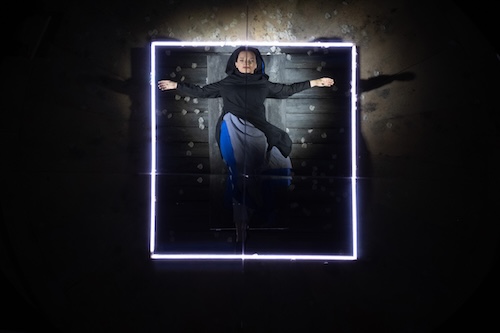
Mary remembers the crucifixion in its physical detail. Smoke rises, people go about their day, and the world does not stop. She also remembers leaving before her son died. Those are difficult things for her to say, and they resist the consoling shape the men want to give them.
In Testament, for a little while, we get to stand with Mary before that story has settled.
And listen to people arguing about what the story is going to be.
Curator: Bora Pajo
Testament
Get the book →October 7, 2026
20261007-oregan-testament-a-close-up
A close-up
The rest of this thread
© Kate Johnson 2023
Tarik O'Regan
Tarik Hamilton O'Regan is a London-born composer based in San Francisco. Working across opera, dance, orchestral, choral, and chamber music, he is drawn to subjects at the intersection of history, literature, memory, and public life. His music has been described as "beautifully imagined, holding the audience rapt" (Financial Times) and "music of startling beauty" (The Observer). Recognized with two GRAMMY® nominations and two Ivors, his work is published exclusively by Novello, has been recorded on more than fifty albums, and is regularly performed throughout the world.
Recent projects include Testament, an opera with a libretto by Colm Tóibín for Irish National Opera; a concerto for oud and period orchestra written for Joseph Tawadros and Philharmonia Baroque Orchestra; and The Artificial Composer, a BBC Radio 3 documentary examining the relationship between artificial intelligence and musical creativity. In 2023 he was commissioned by His Majesty King Charles III to compose the Agnus Dei for the Coronation Service at Westminster Abbey.
Alongside his work as a composer, O'Regan is an experienced broadcaster and writer whose work for BBC Radio has explored the ways cities, technology, and cultural change shape musical life. He has written and presented documentaries, and contributed essays and commentary on music, creativity, and contemporary culture.
O'Regan is an Honorary Fellow of Pembroke College, Oxford, serves on the board of Yaddo, one of the oldest artists' communities in the United States, and is the recipient of the Coronation Medal, the Yaddo Artist Medal, inclusion in The Washington Post's 2022 list of artists "changing the classical landscape," and a Certificate of Honor from the City and County of San Francisco.
Know something the rest of us don't?
Most threads on Rorotoko begin with our invitation. Some begin with a proposal. Both use the same prompts and the same editing, with your own pages in the archive. Proposed threads carry a small Sponsored label and a fee.
Propose a thread →