Arts
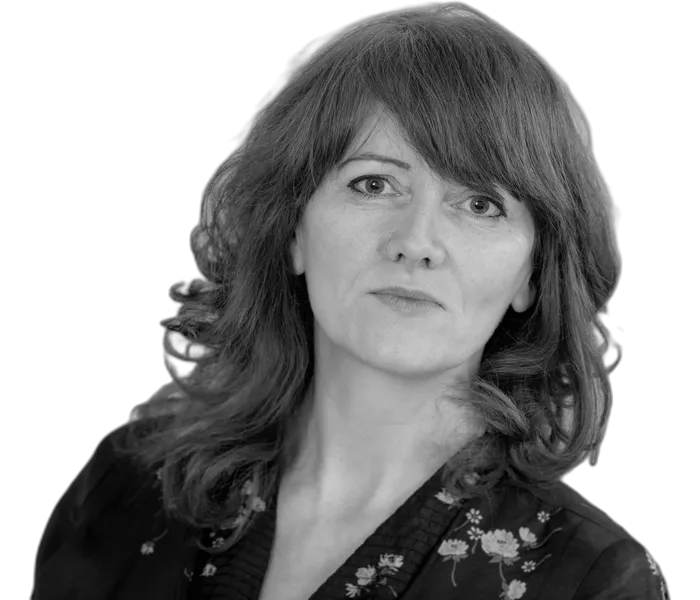
Tarik O'Regan

Testament

The moment you put something on a stage, it becomes present.

One of the things I loved about working on Testament was that the process of making the opera began to mirror what the opera itself is about.

It started with Colm’s words. Then those words became a libretto. I set them to music. The score went to singers and instrumentalists. Then a director, designers and performers began interpreting it. By the time we reached the stage, something that had begun in the imagination of one writer had passed through a large number of other imaginations.

At each stage, somebody acquires a certain amount of authority.

That wasn’t just a neat parallel I noticed afterwards. As I composed, Colm continued to work on the libretto, making tiny adjustments as needed. A line that seemed complete on the page could need more space when sung; elsewhere, the music could carry a passage further without another word being added. We were making decisions together about where the language should lead and where it should give way.

That seems particularly appropriate for a work concerned with how stories are made.

Colm’s The Testament of Mary is intensely interior. Mary is remembering. In prose, a writer can move almost imperceptibly between what is happening now, what happened decades earlier, what somebody said, what Mary thinks somebody said, and what she now believes about it.

Opera has a different problem. The moment you put something on a stage, it becomes present.

Photo Credit: Patrick Redmond and Irish National Opera. Testament had its world premiere at Galway International Arts Festival.

That became our opportunity.

Rather than trying to reproduce the book’s interiority, we could make memory physically happen around Mary. A person she remembers could emerge from the ensemble. A recollection could become a scene. The past could suddenly occupy the same space as the present.

I became increasingly interested in making the musical structure work in the same way.

There is no conventional separation between “the orchestra” and “the stage” in Testament. The instrumentalists are onstage and visible. They perform as part of the same world as the singers and actors. There is no visible conductor.

That means the piece depends unusually heavily on listening. Performers have to breathe together, watch one another, sense where a phrase is going and sometimes communicate through tiny physical cues. In rehearsal, I realised that this wasn’t merely a practical solution. It was part of what the opera meant.

Photo Credit: Patrick Redmond and Irish National Opera. Testament had its world premiere at Galway International Arts Festival.

Everybody is watching everybody else.

Everybody is listening.

Everybody is trying to work out what happens next.

The sound world extends beyond the acoustic performers. There are fixed electronic soundscapes, but these are extrapolated from the musical material of the opera itself. I think of them almost as suspensions of the score’s DNA. They allow the music to remain present even when its source becomes difficult to locate.

That was important because the opera is full of things that are present without being physically there. Jesus himself is the most obvious example. He is the person around whom everything revolves, yet our focus remains on Mary and on the people reconstructing his story.

The larger tradition behind the piece is obviously enormous. Two thousand years of Christianity have given us an extraordinarily powerful set of images of Mary: the Madonna and Child, the Pietà, the grieving mother at the foot of the Cross.

But Colm’s Mary does something startling. She refuses the serenity of those images.

She is frightened. She is angry. She has doubts. She is still in pain. For me, that makes her more rather than less moving.

Photo Credit: Patrick Redmond and Irish National Opera. Testament had its world premiere at Galway International Arts Festival.

Opera has always been fascinated by myth. But myth usually arrives onstage already formed. Gods are gods. Heroes are heroes. We know the story.

Testament offered the possibility of looking at an earlier and much stranger moment: the point before the story has settled.

We see people trying to decide what happened.

And, perhaps more importantly, what it should mean.

Ongoing thread. More from Tarik O'Regan to follow.

‍

Read the full thread →
Tarik O'ReganTestament

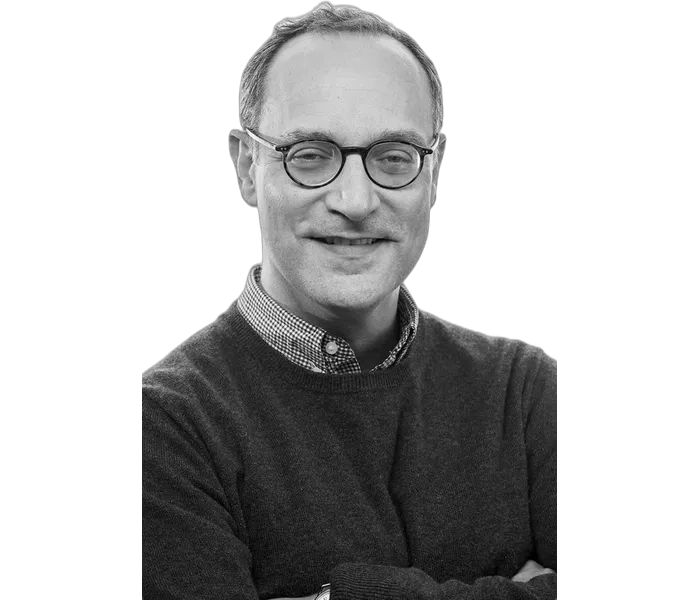
Ethan Warren

I'm Glad I'm Not Me: Bob Dylan on Film

The impetus for this book came when my mind wandered to the Coen brothers' 2013 masterpiece Inside Llewyn Davis. The film (a fictionalized account of the winter of 1961 in the Greenwich Village folk scene) climaxes with a shadowy and indistinct glimpse of an unidentified scrawny young folk singer who strums his guitar onstage and plays a song titled “Farewell” as the film's (invented) protagonist leaves the club following his own mildly successful performance. Dylan's name is never spoken, but it takes only the slightest awareness of the arc of 20th century American pop culture to understand who he is and what he represents: the death knell for the rigidly traditionalist folkie Llewyn Davis. It's as devastating a blow as the physical assault Llewyn experiences behind the club a moment later, serving as the first half of a one-two punch to his way of life. I've long been fascinated by examples of a director using a star's persona as a sort of narrative shorthand that makes some larger cultural point without having to state it explicitly. For a very recent example, think of singer Travis Scott being given the role of bard, and the opening lines of dialogue, in Christopher Nolan's The Odyssey—Scott works wonderfully in the part, but to anyone aware of his work outside this film, there's an additional jolt of characterization served simply by virtue of who's embodying the role (it's a trick Nolan is fond of, as evidenced by his marvelous casting of Bowie as Tesla in The Prestige). The same is true of any Bob Dylan film appearance; in Richard Marquand's justifiably reviled '80s trashterpiece Hearts of Fire, Dylan plays a once trailblazing rocker sliding into middle age, and anytime he enters a room and the assembled crowd finds their jaws dropping, we believe that impact without needing any dialogue to support the point. That's Bob Dylan walking into the room, and we know exactly what that means. By now, Dylan's reputation (if he has one at all among younger generations) is heavily influenced by the famously unsatisfying live performances he's peddled for the last few decades of his so-called Never-Ending Tour. With a voice that's undeniably fraying, arrangements of classic hits that don't remotely resemble the album versions, and a perch behind a keyboard and beneath a wide-brimmed hat, many report feeling a barely-concealed hostility wafting off Dylan as he performs (though of course it's worth mentioning that many die-hard Dylanologists insist he remains as good as he's ever been). With this perception threatening to overtake the mid-20th century firebrand in the public consciousness, there's never been a better time to look back and consider what we're watching when we watch Bob Dylan on screen.

Ongoing thread. More from Ethan Warren to follow.

Read the full thread →
Ethan Warren

This week's threads

All the threads →
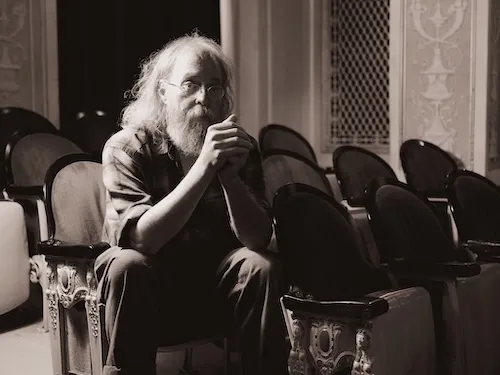
Steven Nadler
From the archive ·
October 21, 2011

A Book Forged in Hell

Steven Nadler
A Book Forged in Hell is about one of the most important and controversial books in Western history, one that continues to be vitally relevant today. Writing in May, 1670, the...
Read the thread

Know something the rest of us don't?

Most threads on Rorotoko begin with our invitation. Some begin with a proposal. Both use the same prompts and the same editing, with your own pages in the archive. Proposed threads carry a small Sponsored label and a fee.

Propose a thread →

No paywalls. No selling your data.

Support this awesome independent project.

or shop the merch →