What is the RORO Thread? One sharp micro-interview. Cutting-edge of scholarship. The art we love.
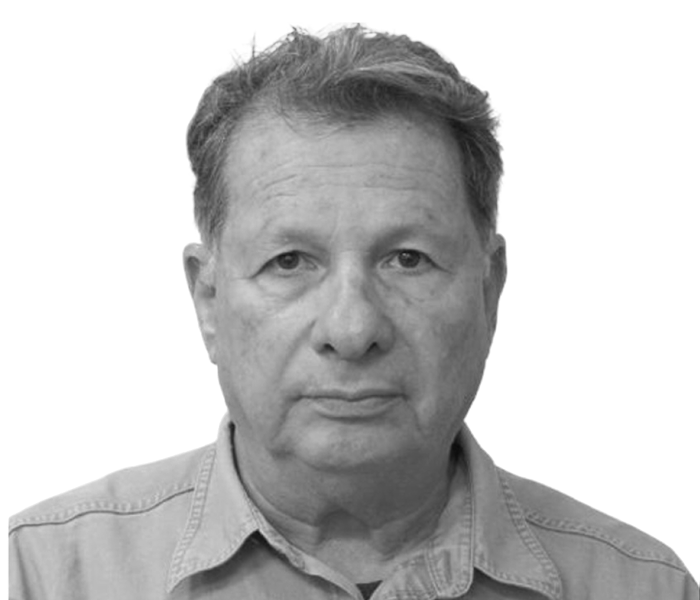
Yosef Grodzinsky
June 25, 2026
What defines our species more than language? I'll try to tell you a modern story about language in three steps. I was taught that without a conflict, there's no story. Luckily, here we are looking at a big debate:
Step I: The conflict. Contemporary linguistics, founded and inspired by Noam Chomsky, seeks to understand the hallmark of our humanity—language. Linguists develop powerful tools to discover how knowledge of language is acquired and how the brain puts it to use. AI experts, using vastly different methods, create remarkable neural networks—large language models (LLMs) such as ChatGPT—said to learn and use language like us.
Chomsky called LLMs "a false promise." AI leader Geoffrey Hinton has declared that "neural nets are much better at processing language than anything ever produced by the Chomsky School of Linguistics."
Step II: The puzzles. Who, if anyone, is right, and how can we tell? Do we learn everything from scratch, or could some knowledge be innate? Is our brain one big network, or is it built out of modules, language being one of them?
Step III: The plot. I offer an extended meditation on these questions, with some concrete suggestions as to how we should proceed in our quest for the best theory of linguistic knowledge couched in a human brain, and for the most effective language engine. Reaching these goals requires philosophical, linguistic, engineering and neuroscientific expertise. As the book aims for the uninitiated, I introduce the basics of each approach, and then confront them with the reality as it emerges from the engineering, the linguistic, and the neurological record. I walk readers through vastly different methods, tools, and findings from all these fields. As my goal is to find a common path forward, I describe the conflict, but also locate points of potential contact, and sketch a joint research program that may unite these communities in a common effort to understand knowledge and learning in the brain.
Ongoing thread. More from Yosef Grodzinsky to follow.
We don't have paywalls. We don't sell your data. Please help to keep this running!