What is the RORO Thread? One sharp micro-interview. Cutting-edge of scholarship. The art we love.
Meredith F. Small
June 17, 2026
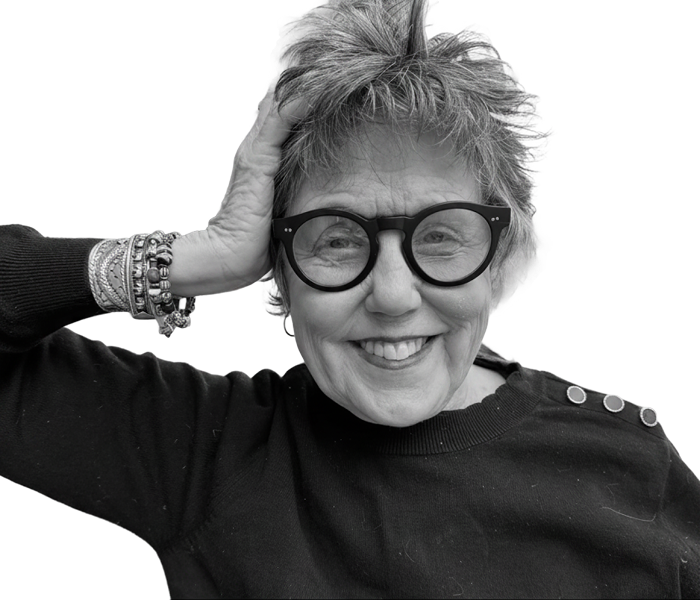
© Francesca Merrick
Thinking is a mysterious process. For millennia, philosophers and scientists have asked big and small questions about the workings of our minds. They have examined and questioned how the brain operates, how it gathers information through the senses, and then makes decisions or judgments based on that information. And yet, all that work has not really produced a clear "theory of mind." We really don’t know how or why we think as we do. Everything from reactions such as the fight or flight response, falling in love, and deciding what to have for dinner are still mysteries. Our thoughts are sometimes positive, sometimes negative, and most of the time neutral as we look about us and try to grasp what it means to be sentient, conscious, and self-aware.
How We Think is a collection of science journalism features and shorter pieces, essays, and pointed commentary that focus on issues of brain, mind, and thinking. But I am neither a neuroscientist nor a psychologist; instead, in these pieces, I take the anthropological view on how the mind works. The anthropological approach is different from, say, psychology, sociology, history, or economics because it is both deep in time, meaning evolutionary, and broad in scope, meaning across cultures.
Usually, writers of the mind focus on the individual, or on our species, Homo sapiens in full. But as an anthologist, I wonder about how people in other cultures, that is, non-Western cultures, think about themselves, about life, and what is expected of them. We call these collective thoughts a "belief system," an unconscious behavioral template that is deeply embedded in each of us, brought to us the moment we are born, and then reinforced over a lifetime. And it is important to acknowledge that we can’t call something "human thought and behavior," a mark of our species that sets us apart from other animals, unless it is universal.
I am also interested in the evolution of our minds from the earliest human-like fossils 3.8 million years ago to modern humans who arose about 200,000 years ago. An overarching question for anthropologists is the selective value of a big and complex brain. We always beg the question, for what reason did natural selection favor more brain cells and more complex paths of thought?
We humans are so proud of our big brains because it "feels" like brain size must be an advantage, but is it? As some of the essays in this book suggest, a lot of bad behavior and negative thoughts come out of those big brains as well. We feel superior to other animals who are doing just fine in their particular habitat, and we often feel it is our "right" to rule everything on the planet. Our big brains might, in the end, be our downfall as we recklessly exploit others and our environment with the excuse that big brains make us the rulers of earth, when in fact, our big brains might just be a disadvantage.
How We Think: The Hidden Life of Everyday Ideas (June 2026) is the first of three volumes of Meredith Small's collective works of science journalism and essays published by the American Philosophical Society. How We Know: The Improbable Sources of Human Knowledge comes out in June 2027 and How We Behave: The Social Science of Everyday Life arrives in June 2028.
Ongoing Thread. More from Meredith Small to follow.
We don't have paywalls. We don't sell your data. Please help to keep this running!