
Bicycle Thieves
It is remarkable how World War Two continues to loom so large in our mid-21st century geopolitics and in our cultural imaginations, even more than 80 years after it ended. But one of the most fascinating cultural turns of the last generation or so in both historiography and cultural memory has been a shift of focus onto the aftermath of that war as a distinct, foundational moment in world history in its own right. Europe, the West, empires and their disarticulation, dictatorships and their collapse, new global binaries thrown up by the Cold War, new forms of utopian internationalism and dystopian degradation: all were potently shaped by the specifics of the postwar, by the devastation of war itself and the upside-down and opened-up world it left behind. Tony Judt’s magisterial account, entitled precisely Postwar, published in 1995, can stand as an emblematic marker of this turn to the aftermath.
Culture, too, had its postwar moment, a moment of crisis and renewal that rushed in to fill the void left by the end-times and the new beginnings of the late 1940s, offering ways to capture a world in transition, the new that was waiting to be born, and with it new subjects and objects of expression, new stories. At its very widest, then, my micro-study of one film from 1948 belongs to this turn to the postwar. Paying close attention to Bicycle Thieves, both under its conventional label as a neorealist classic – neorealism was one much-celebrated symptom of that postwar cultural explosion – and against its simplistic labelling as a classic, is one way to tap into the lives and landscapes, the lived experience of this uncertain historical moment.
In this sense, I argue in the book, Bicycle Thieves deliberately occludes the war in a way that was somewhat unusual for the time, but it remains there as an undertow that conditions the social, economic and existential realities of postwar Rome that the film depicts. Why is our hero Antonio unemployed? Why do he and his wife Maria have one infant only a few months old and one 8- or 9-year-old son, Bruno, and what histories did these parents see and live through between their two births? What has drained Antonio of his drive, his life-force, his dignity as a worker, father and husband, his happiness? De Sica’s film very deliberately leaves these ‘origin’ questions unanswered (the answers would be Fascism, the war, occupation, we might surmise). In doing so, the subject of the film’s tragedy and melodrama becomes the ‘here and now’ of the postwar, subtly shadowed by the dark heart of 20th-century history that preceded it.
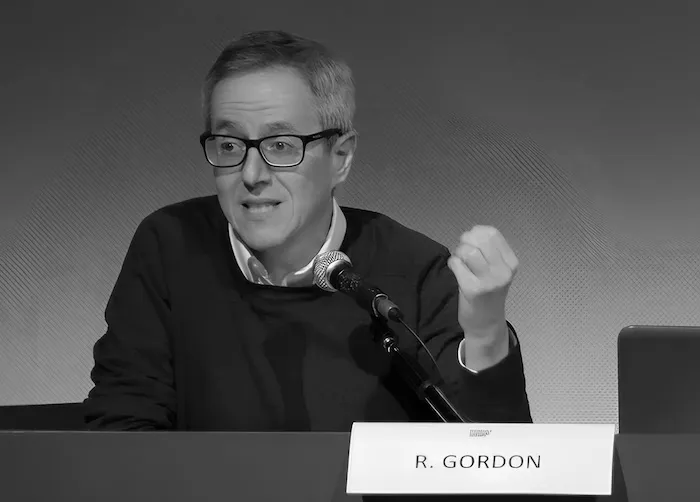
Ongoing thread. More from Robert S. C. Gordon to follow.
This week's threads
All the threads →

Songbooks
Know something the rest of us don't?
Most threads on Rorotoko begin with our invitation. Any thread can begin with a proposal: you write it with the same prompts every thread answers, and we review it.
Propose a thread →