
.png)
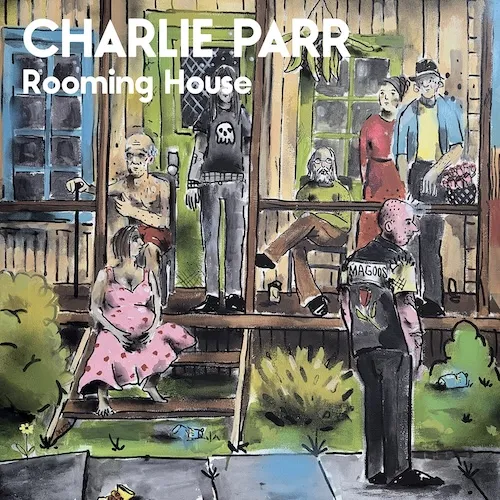
If someone picked up the book, the first thing they’d notice is the cover. It’s fantastic. We spent a lot of time on it. I’ve done all my own covers, and Artan and I spent an enormous amount of time over photographs—debating them, comparing them. I don’t think we spent as much time looking at photos as we did writing the book, but it was close.
If I were picking up the book myself, I would probably go straight to the introduction. The introduction tells the story of Tirana today. It situates the reader immediately. One of the things Artan and I agree on is that no other country has tried to travel furthest and fastest twice in such a short period of time. There’s the modernization beginning in 1945, which collapses after the Chinese break, and then the period after the collapse of communism. Twice, Albanians have had to rush history.
I hope readers can enter Tirana at the beginning of the book and try to imagine what that looks like. More broadly, I want readers to understand that Albania is unique, but also that it shares features with other places. This is an 'ordinary tyranny', a dictatorship that brought enormous hardship to people for the sake of something else.
It’s also important to me that the book appears in Albanian. It’s coming out very soon, and it has to fill a gap. Albanian researchers have been very reluctant to approach this subject, and Albania is not the only country to come out of a dictatorship that doesn’t want to look closely at the legacy of the old boss. You see that elsewhere as well—it often takes time. I hope the book starts a bigger conversation and helps younger people understand what it all means.
One of the legacies I want Albanians to think about is the persistence of black-and-white narratives. Hoxha’s legacy, in some ways, continues through this sharp worldview. If you watch the Albanian transition, you can see how that replicates itself—an inability to provide nuance, to listen to other positions. That has deeply impacted Albania’s transition, which has been extremely challenging. It’s not a textbook example of a successful transition, though only now can you see some light at the end of the tunnel. A lot of that difficulty comes from not dealing with the past effectively and not having a national conversation about what happened. That failure allows other negative features to persist, and you can see the consequences of that in Albania since 1991.
All transitions out of communism have shortcomings. Albania, in some ways, was among the worst prepared. Albanians like to say they experienced the harshest form of communism—maybe that’s true—but I don’t find much use in ranking suffering or creating hierarchies of blame. It started by people who were very ill-equipped to do it.
Certain scenarios were perpetuated because of training, legacy, and mindset. I’ve always insisted that the reluctance to deal with the past in a systematic way—something that would have had real meaning for Albanians—was one of the things that set Albania on this haphazard journey toward something. I’m not sure where that “something” is, because it’s still an ongoing process. What it meant, though, is that the transition had far too many problems. It was too fraught, too black and white, and it preserved the worst aspects of Hoxhism: the demonization of enemies and the blanket refusal to acknowledge that the past isn’t so easily compartmentalized.
You can see this reluctance in how museums have been handled. You can see it in the evolution of the socialist interpretation of the communist system, which is invisible in Bunk’Art 1 and 2. To me, those aren’t serious exhibits. They work very well for tourists, but that’s not the point. By not understanding Hoxha and not opening up a real conversation, Albania is led down a very dangerous path. Hopefully, this book addresses some of those issues and gets people to read it. It’s very readable—it’s not a classic textbook. It has very few footnotes. It’s meant to be something people can read, something young people can pick up and actually take something from.
I haven’t written a book with footnotes in a while now, and we ended up, I think, with fourteen. That’s not so bad, but it’s not how I judge the book. I wanted a book you could start anywhere. Each chapter stands on its own, and as Artan mentioned in his interview, the chapters have these funky names. They’re better situated, so it’s not the standard Enver and Power or Enver and the Yugoslavs. You’ll find there’s a lot that’s new and a few real revelations. If you know the period, the book will reinforce what you already suspect: these were very harsh times for people.
The debates in Albania still reflect the contours Hoxha left behind. I was amazed by this, and I wrote about it. My book on King Zog was meant to be a funny book, and it generated a lot of hostility. The King’s family are a joke. I was there when Zog came back in 2012, and then he got a statue. I was stunned. I’m not saying you bury the guy and forget he happened. He’s been moved now. Artan sent me a picture—they were doing some renovations, and he’s tucked beside a tree now, next to a bingo stand.
I stayed in Tirana from 1993 to 1995 with Radio Free Europe. It was a great job. I loved it. I was in Albania for the first time in 1990. Those were rough times in the 1990s. There was no food, but nobody died of hunger. Even for foreigners it was difficult, because there weren’t so many of us there. I lived a normal life in Tirana. I had a terrible apartment with no water or electricity, and I paid about 300 Deutschmarks a month, which was probably far more than it was worth.
I had a one-bedroom apartment filled with woodworms. It was a disaster. We laughed a lot, though. All we did was drink. We were drinking fernet all the time. I don’t know why it was fernet, but that was our go-to. Those were weird times.
Albanian politics is so tedious. When I left in 2025, the last time I was there, I was doing research on museums, and I had this feeling that I wouldn’t be back. I like Albania, but it’s not my Albania anymore. I thought my time had passed, and that was fine.
We don't have paywalls. We don't sell your data. Please help to keep this running!